
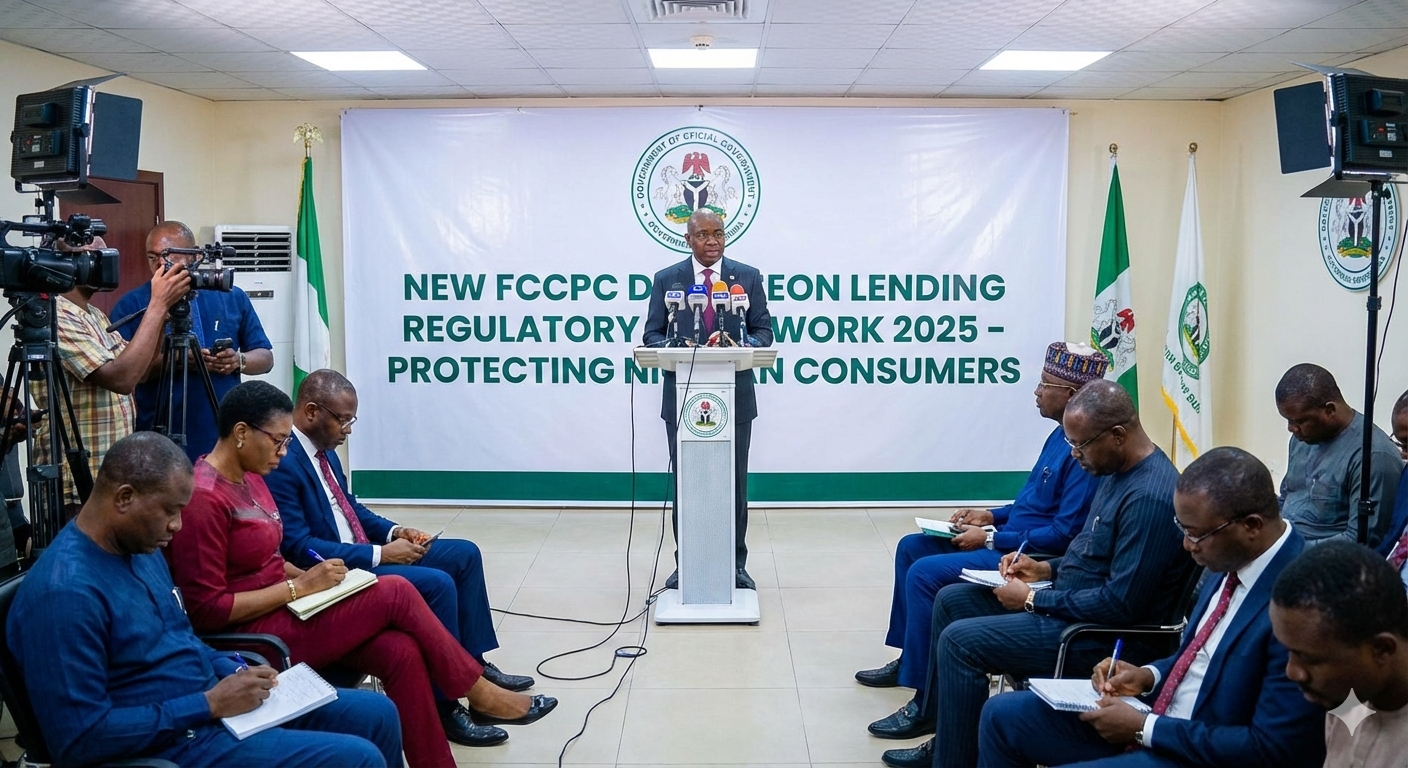
The era of “loan sharks” and digital harassment in Nigeria is facing a legal reckoning. As of January 2026, the Digital, Electronic, Online, or Non-Traditional (DEON) Consumer Lending Regulations 2025 are fully operational, fundamentally reshaping how fintech companies interact with borrowers.
Whether you are a fintech founder or a consumer, understanding the FCCPC’s new regulatory framework is essential for navigating the credit market this year.
The Shift from Interim to Permanent: What is DEON?
Released by the Federal Competition and Consumer Protection Commission (FCCPC) in July 2025, the DEON Regulations moved the industry from temporary guidelines to a permanent, codified legal structure. These rules were designed to stop the “wild west” behavior of unregulated apps and ensure that digital credit is both fair and transparent.
Core Pillars of the 2025/2026 Framework
- Total Transparency: Lenders are legally required to provide a “Key Facts Statement” that outlines the total cost of credit, including interest rates and late fees, in a way that is easy to understand.
- Ethical Recovery Only: Gone are the days of defamatory “shaming” messages sent to a borrower’s contacts. Under DEON, debt collection must respect human dignity and the Nigeria Data Protection Act.
- Platform Accountability: Major platforms like Google and Apple are now required to delist any app that does not hold a valid FCCPC approval certificate.
2026 Deadlines: The Compliance Countdown
The FCCPC has set strict milestones for the first half of 2026 to ensure every operator is vetted:
- April 2026 Deadline: This is the final cutoff for lenders currently operating under “provisional eligibility” to complete their full registration and background checks.
- May 1, 2026: The last day for “deemed licensees” (those registered under the old 2022 rules) to submit their new applications for 2026 approval.
- June 30, 2026: On this date, all old licenses expire. Any app without a DEON 2025 Certificate will be considered illegal and subject to immediate shutdown.
The Cost of Operation
For Digital Money Lenders (DMLs), compliance is a significant investment. The fee structure for 2026 includes:
- Application Fee: ₦100,000.
- Approval Fee: ₦1,000,000 (covers up to two lending platforms).
- Renewal Fees: Annual fees apply to maintain the license and ensure ongoing oversight.
Why This Matters for Borrowers
The DEON Regulations prioritize the Nigerian consumer. If a lender accesses your contacts without permission or uses abusive language, they are in violation of federal law. In 2026, consumers can report these violations directly to the FCCPC Portal, leading to potential fines of up to ₦100 million for the offending company.
Pro-Tip for 2026:
Before downloading a loan app, check the FCCPC Status. Licensed lenders are now required to display their registration details within the app’s “About” section or on their official website.
Final Thoughts
The DEON Regulations 2025 are not just about paperwork; they are about restoring trust in Nigeria’s digital economy. As we move toward the mid-2026 compliance cutoff, the market will likely see a consolidation, leaving behind only the most professional and ethical lenders.
DEON consumer lending rules, FCCPC loan app list 2026, Nigeria digital lending laws, debt recovery regulations Nigeria, DML registration fees, consumer credit rights Nigeria 2026.
FAQ
Understanding Nigeria’s DEON Digital Lending Regulations (2026 Edition)
As the Federal Competition and Consumer Protection Commission (FCCPC) tightens its grip on the fintech sector, both borrowers and lenders have questions about the Digital, Electronic, Online, or Non-Traditional (DEON) Consumer Lending Regulations 2025.
Here are the top 10 most frequently asked questions regarding the state of digital lending in Nigeria for 2026.
1. What exactly are the DEON Regulations?
The DEON Regulations 2025 are a set of federal laws governing all non-traditional lending in Nigeria. They replace the old interim guidelines and establish permanent rules for data privacy, interest rate transparency, and ethical debt collection.
2. Is my favorite loan app legal in 2026?
A loan app is only legal if it has been fully registered and approved by the FCCPC under the DEON framework. You can verify the status of any lender by checking the official FCCPC database.
3. Can a loan app still message my contacts if I default?
No. Under the DEON Regulations and the Nigeria Data Protection Act, it is strictly illegal for Digital Money Lenders (DMLs) to access your contact list or message your friends and family. This is considered a severe privacy violation.
4. What are the key compliance deadlines for lenders in 2026?
- April 2026: Deadline for provisionally registered lenders to complete full registration.
- May 1, 2026: Final date for “deemed licensees” to apply for new approvals.
- June 30, 2026: All old licenses (pre-2025) expire completely.
5. How much does it cost for a company to register as a DML?
Lenders must pay a non-refundable application fee of ₦100,000 and a one-time approval fee of ₦1,000,000 (which covers up to two lending applications).
6. What happens to lenders who break these rules?
The FCCPC has the power to impose heavy sanctions, including fines starting at ₦100 million, permanent delisting from the Google Play Store/Apple App Store, and criminal prosecution of company directors.
7. Do these regulations apply to traditional banks?
Commercial banks licensed under BOFIA are generally exempt from FCCPC registration, as they are regulated by the CBN. However, Microfinance Banks (MFBs) operating digital lending apps must still apply for a waiver or register under the DEON framework.
8. What should I do if a lender is harassing me?
If a lender uses defamatory language or “shames” you, you should document the evidence (screenshots) and file an official complaint via the FCCPC Consumer Protection Portal.
9. Are there limits on interest rates under DEON?
While the DEON regulations focus heavily on transparency, they require lenders to disclose the Total Cost of Credit upfront. This prevents lenders from hiding massive interest rates behind “service fees” or “administrative charges.”
10. Can a lender hide their terms and conditions?
No. The regulations mandate that all loan terms must be presented in “Simple English” and be easily accessible before a borrower clicks “Accept.” Any hidden clause is considered legally unenforceable.
DEON FAQ, FCCPC loan app rules 2026, digital lending Nigeria help, stop loan app harassment, FCCPC registration status, Nigeria fintech laws 2026.
Leave a Reply