
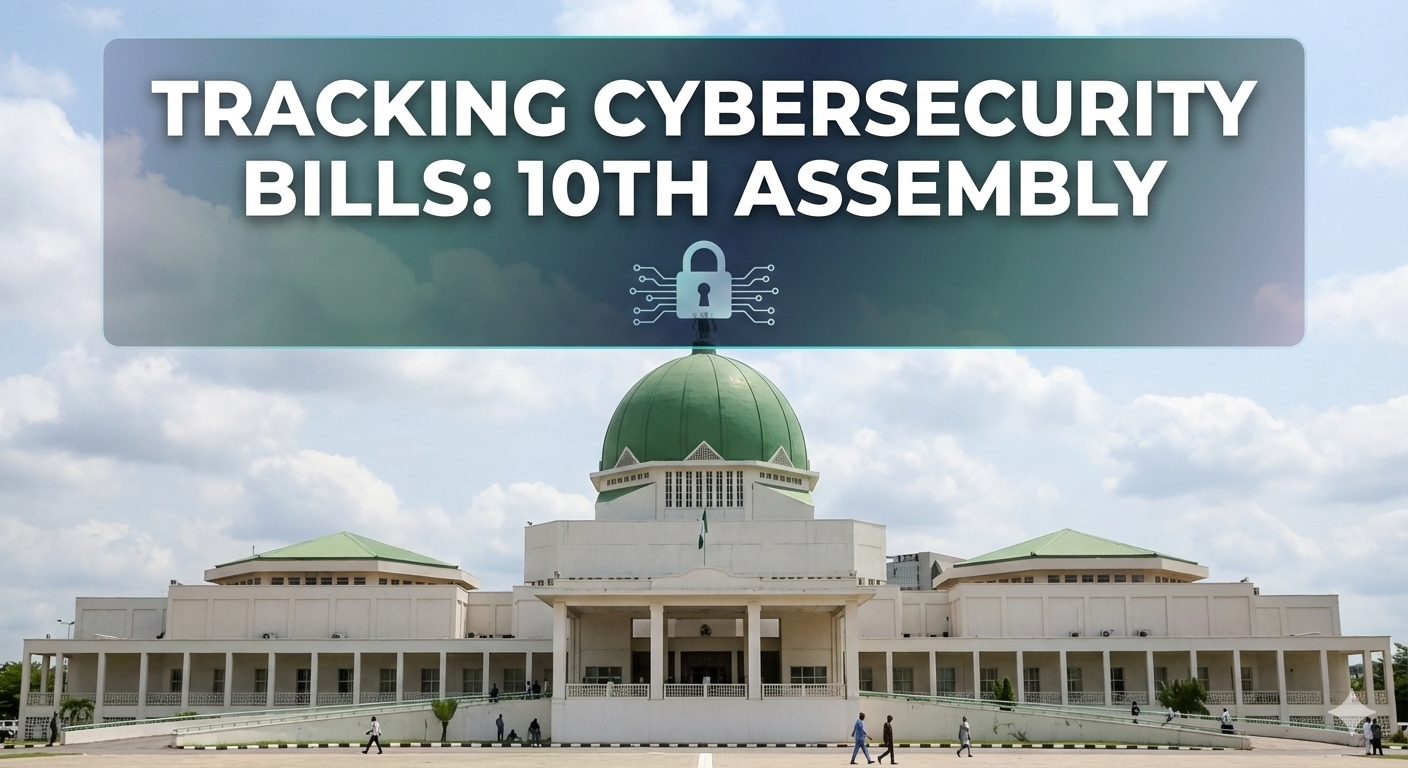
The 10th National Assembly has placed renewed attention on cybersecurity as Nigeria continues its rapid digital transformation. With government services, financial systems, national infrastructure and citizen data increasingly moving online, lawmakers have been under pressure to respond to rising cyber threats through legislation. The history of cybersecurity related bills during the 10th Assembly reflects growing awareness, evolving priorities and the urgency to protect Nigeria’s cyberspace.
At the beginning of the 10th Assembly, cybersecurity discussions were largely driven by recurring data breaches, cybercrime incidents and attacks on critical systems. Lawmakers recognised that existing frameworks were struggling to keep pace with emerging threats, especially those targeting government platforms, financial institutions and digital public services.
Several bills introduced during the Assembly focused on strengthening national cyber resilience. These proposals addressed areas such as protection of critical national information infrastructure, regulation of cybersecurity operations, coordination among security agencies and clearer responsibilities for public and private sector operators in cyberspace.
Another major legislative focus was data protection and privacy. The passage and enforcement of the Nigeria Data Protection Act provided a legal backbone for safeguarding personal data, but the Assembly continued to review supporting cybersecurity bills aimed at closing enforcement gaps and aligning technical security obligations with privacy requirements.
Throughout the legislative sessions, cybersecurity bills increasingly reflected a shift from reactive approaches to preventive and proactive measures. Proposals began to emphasise risk management, continuous monitoring, information sharing and mandatory security standards for systems handling sensitive data, particularly in sectors such as finance, telecommunications, healthcare and government revenue.
The 10th Assembly also examined the role of technology and third party service providers. As more government services became digitised and outsourced, bills highlighted the need to regulate licensed operators, define accountability and ensure that vendors handling national data meet minimum cybersecurity and data protection standards.
National security considerations featured strongly in debates. Lawmakers acknowledged that cyber threats are no longer limited to fraud or data theft, but now include espionage, disruption of critical services and threats to economic stability. This understanding influenced legislative efforts to integrate cybersecurity into broader national security and defence strategies.
Despite progress, gaps remain. Many of the bills highlighted the challenge of implementation, funding and technical capacity. Effective cybersecurity legislation requires not only laws, but also skilled personnel, continuous testing and collaboration between government and private sector experts.
Cybersecurity professionals have repeatedly stressed that laws alone cannot secure cyberspace. Practical implementation, enforcement and real world testing are essential. Without these elements, even well drafted bills risk becoming symbolic rather than impactful.
laws alone cannot secure cyberspace. Practical implementation, enforcement and real world testing are essential. Without these elements, even well drafted bills risk becoming symbolic rather than impactful.
As the 10th Assembly continues its work, the history of cybersecurity bills shows a clear trajectory toward stronger digital governance. The challenge ahead is to ensure that legislative intent translates into practical protection for citizens, businesses and national infrastructure.
This is important to national security, economic growth and public trust in government. The legislative journey of the 10th Assembly marks an important step, but sustained action beyond the law will determine its true impact.
Leave a Reply