
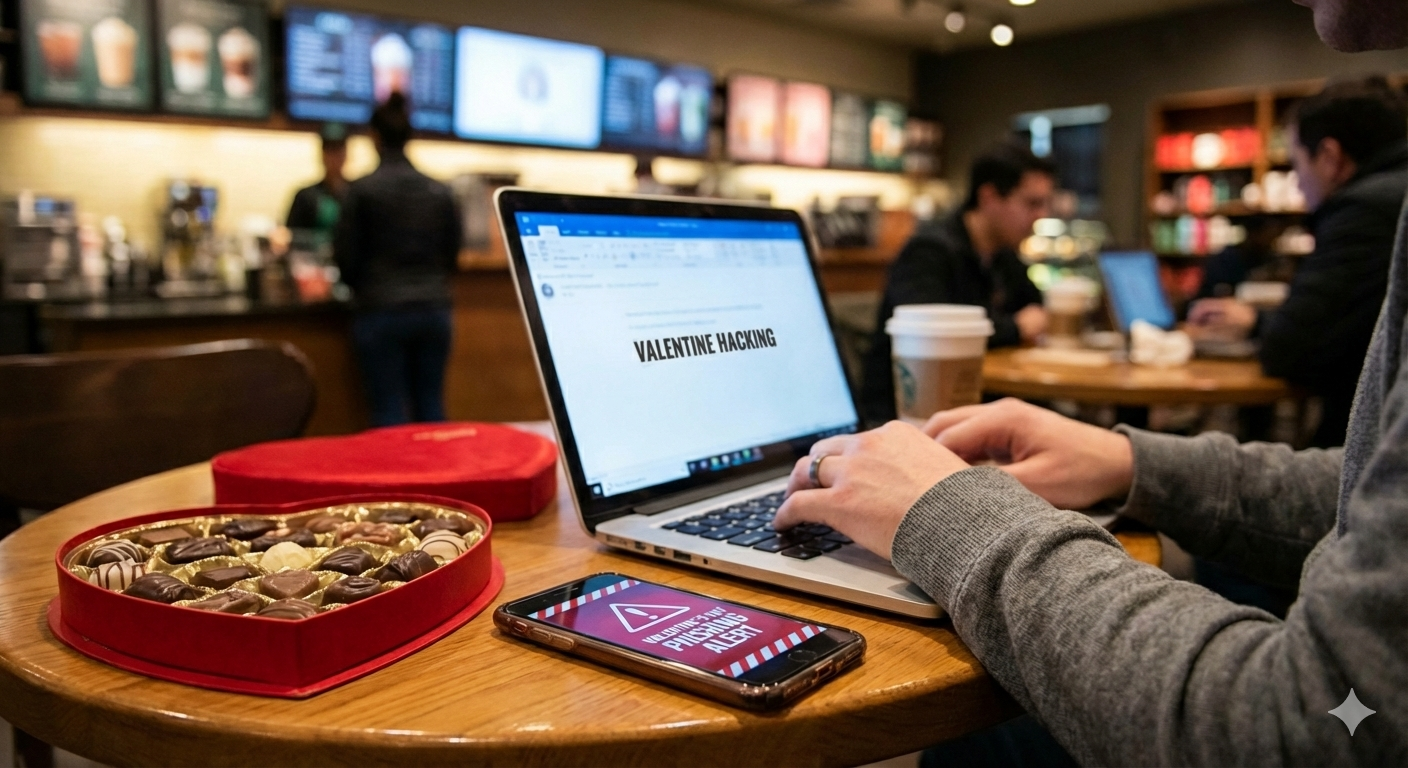
Valentine Hacking
Term Coined by Benedict Ugwuja
By Staff Reporter
As couples and friends across the country exchange flowers and heartfelt messages this Valentine’s season, cybersecurity professionals are issuing a quiet but urgent warning. Romance, they say, has become an attack surface.
The term Valentine Hacking, coined by Benedict Ugwuja, describes the deliberate exploitation of emotional vulnerability during Valentine celebrations for manipulation, fraud, and digital compromise. It highlights how affection, validation and romantic excitement can be weaponised to extract sensitive information, money, or access to systems.
Security experts explain that during Valentine’s period, emotional defences are often lowered. Expressions such as “I love you” can create rapid trust and emotional reciprocity. In that state, individuals may overshare personal information, ignore inconsistencies, and dismiss warning signs they would normally question.
One cybersecurity consultant noted that attackers do not always break into systems. Sometimes, they are invited in.
A Short Story
Amaka met Daniel online two weeks before Valentine’s Day. He was attentive, thoughtful, and unusually expressive. Within days, he spoke about destiny and a future together. On Valentine’s morning, he sent her a message saying he had arranged a surprise gift delivery and asked her to confirm her address through a link.
She clicked.
Within hours, her email and banking apps were locked. The link had harvested her login credentials. The romantic messages stopped shortly after.
Amaka later admitted that she ignored the red flags because she did not want to “ruin something beautiful ”.
The Manipulative Techniques
According to Ugwuja Benedict, Valentine Hacking commonly involves rapid emotional escalation. Phrases that suggest deep attachment early in a relationship are designed to accelerate trust. Love bombing, excessive compliments and constant communication are used to create emotional dependency.
Seemingly harmless questions such as “Where did you grow up?” or “What was your first pet’s name?” often mirror answers used in account recovery processes. Attackers gather this information patiently, building profiles that can later be used for password resets or identity theft.
Gift delivery scams are also prevalent. Victims receive messages claiming a Valentine package is awaiting confirmation. The links typically lead to phishing pages that capture login credentials or install malware.
Sextortion cases also rise during this period. Individuals persuaded to share intimate images or participate in private video calls later find themselves blackmailed.
Beyond Personal Relationships
Benedict Ugwuja warns that the threat is not limited to individuals. Corporate executives and public officials can also be targeted through romantic manipulation. Emotional compromise can lead to organisational compromise if sensitive conversations or credentials are disclosed.
Valentine celebrations often involve real time location sharing and social media updates. These posts may reveal patterns of movement, financial behaviour, and personal associations. Photo metadata can expose GPS coordinates without users realising it.
Cybersecurity, professionals stress, is behavioural before it is technical.
Red Flags
- Love declared unusually quickly
- Pressure to move conversations off trusted platforms
- Requests for money before meeting in person
- Refusal to engage in live video verification
- Excessive curiosity about personal background details
- Emotional urgency or guilt tactics
Staying Safe
Specialists recommend enabling multi factor authentication, avoiding unsolicited links, disabling location tagging, and resisting pressure to overshare early in relationships.
Valentine Hacking is a reminder that emotional intelligence must be matched with digital awareness. In today’s connected world, affection can travel fast. Same with exploitation.
“love may be celebrated, but it should never come at the expense of security….Benedict Ugwuja
Leave a Reply